Opening Hours: Mon – Thur 8:30 am – 5:00 pm Fri 8:30 am – 4:00 pm
Learn how band planning can improve spectrum management and maximize network performance.
Spectrum planning is a critical process that shapes the way we communicate and connect on a global scale. By methodically allocating portions of the frequency spectrum, we ensure that various services—ranging from telecommunications and broadcasting to aviation and emergency services—can operate efficiently and effectively. This strategic planning is not arbitrary; it adheres to international agreements and technical specifications, which harmonize usage across borders and maximize the potential of our shared resources.
Imagine a world where interference disrupts emergency communications just because spectrum allocation was handled haphazardly. That is a reality we can prevent through careful spectrum planning. Each segment of the frequency spectrum has unique characteristics and potential applications, and as such, understanding these nuances is key. National priorities and policies should guide our allocation strategies, ensuring that our most critical communications infrastructure is robust, reliable, and ready to adapt to evolving technological landscapes.
In an increasingly connected world, where demand for wireless services continues to soar, proactive spectrum planning is not simply desirable—it is essential. We must champion a future where spectrum is used to its fullest potential, driving innovation, economic growth, and public safety. With a confident approach to spectrum planning, we can lead the charge in creating a unified, efficient, and dynamic spectrum environment that meets the needs of today and anticipates the demands of tomorrow. Let us seize this opportunity to shape a connected future where everyone can thrive.
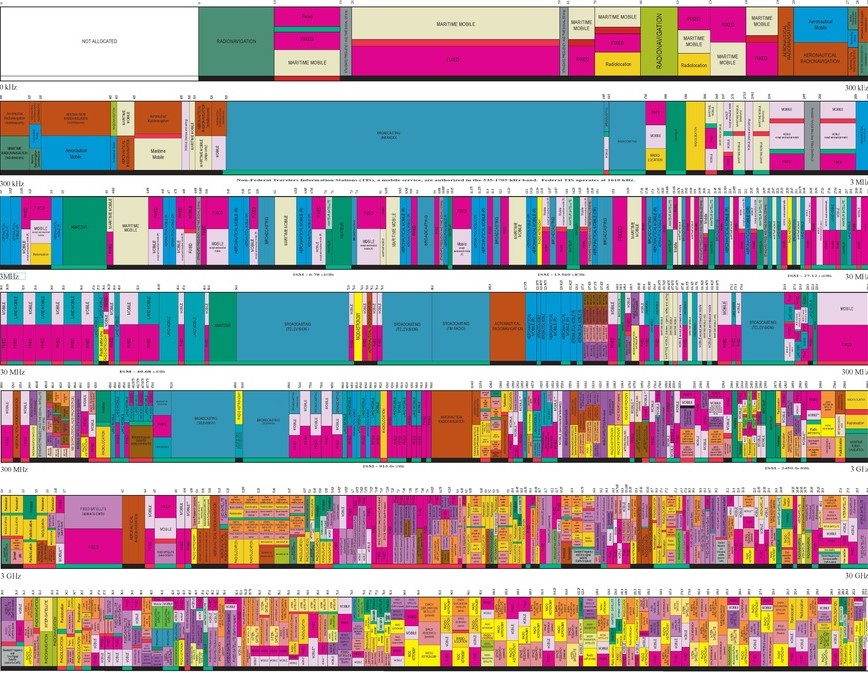
Band planning optimizes radio spectrum allocation, minimizing interference and maximizing communication capacity.
Efficient spectrum utilization, improved signal quality, and enhanced network performance.
The Department assigns frequencies after detailed technical analyses and/or reviews, using state-of-the-art engineering analysis tools and best practices to foster efficient use of the scarce resource of the spectrum.
Frequency allocation, often referred to as spectrum allocation, is a vital cornerstone of modern communications. By systematically designating and regulating the electromagnetic spectrum into specific frequency bands, we not only facilitate diverse radio services—such as broadcasting, mobile communications, and satellite operations—but also ensure their seamless coexistence. This critical process lays the groundwork for a harmonious and efficient communication landscape, free from the chaos of interference.
Moreover, frequency assignment takes this essential framework one step further. By authorizing individual radio stations or users to operate on specific radio frequencies or channels within these designated bands, we guarantee that each entity has a unique slice of the spectrum. This meticulous management prevents interference and maximizes the utility of our precious electromagnetic resources.
In an era where connectivity is paramount, proper frequency allocation and assignment are not merely administrative functions; they are the backbone of our digital society. By understanding and implementing these principles, we pave the way for a future where communication is clearer, more reliable, and more accessible than ever before. Let’s embrace the necessity of these processes and advocate for their continued importance in the fast-evolving landscape of technology and communications.
Fixed wireless is the operation of wireless communication devices or systems used to connect two fixed locations with a radio or other wireless link
Land mobile service is a mobile service between base stations and land mobile stations, or between land mobile stations.
Broadcasting service is defined as a radiocommunication service involving the transmission of content, such as audio or video, to a large, dispersed audience.
International Mobile Telecommunications (IMT) is the term used to describe mobile broadband systems. IMT-2000 is commonly associated with 3G technology.
Satellite services are radiocommunication services that use one or more satellites to connect earth stations, encompassing fixed-satellite service (FSS), mobile-satellite service (MSS), inter-satellite service, and Earth exploration-satellite service
Amateur service is a radiocommunication service for self-training, intercommunication, and technical investigations by duly authorized persons interested in radio technique, solely for personal purposes
A maritime mobile is a mobile service between coast stations and ship stations, or between ship stations, or between associated on-board communication stations. The service may also be used by survival craft stations and emergency position-indicating radiobeacon stations
Safety service is a radiocommunication service used permanently or temporarily for the safeguarding of human life and property, including aeronautical and radio navigation services
Meteorological service is a radiocommunication service used for meteorological, including hydrological, observations and exploration.
Jamaica is currently assessing the upper 6 GHz band to make an informed decision on enabling Wi-Fi 6E and Wi-Fi 7. As global trends highlight the significant benefits of wider 6 GHz channels—higher speeds, lower latency, and better performance in dense environments—local regulators are reviewing technical, regulatory, and market factors to determine the best approach. This assessment will help ensure that any decision supports Jamaica’s long-term connectivity needs, promotes modern digital services, and aligns with national development goals.
The demand isn’t just terrestrial mobile: rising interest in satellite-to-device communications, non-geostationary satellites (NGSO), high-altitude platform stations (HAPS), IoT connectivity in remote areas, all require spectrum or reallocation. In upcoming global planning, some of the spectrum bands under study or proposed may support satellite/space-based services as well as traditional mobile , giving “hybrid connectivity” options (satellite + terrestrial).
Under the agenda from WRC‑23 (World Radiocommunication Conference 2023), several new bands have been identified or are under study for International Mobile Telecommunication (IMT) use in Region 2. Mid-band bands like ≈ 3600–3800 MHz are already earmarked for IMT. Looking forward to the next planning cycle (up to ~2030 and beyond), there are proposals for new allocations or studies in much higher bands, e.g. ≈ 7.125–8.400 GHz and ≈ 14.8–15.35 GHz — for mobile or broadband use. Use of higher-frequency (mmWave / upper-GHz) spectrum supports very high data rates, lower latency, and capacity needed for 5G-Advanced and early 6G services (e.g. high-definition streaming, VR/AR, massive IoT, fixed wireless access (FWA), high-speed backhaul).
The Spectrum Management Authority (SMA) actively collaborates with international bodies to ensure alignment with global standards and practices. This coordination allows SMA to effectively regulate and monitor Jamaica’s radio spectrum network.

The Spectrum Management Authority (SMA) stands at the forefront of transformative change in the Caribbean, partnering with the Caribbean Telecommunications Union to spearhead vital initiatives in spectrum harmonization and coordination. By advocating for consistent radio spectrum allocation across borders, the SMA not only paves the way for seamless regional roaming but also fosters interoperability among telecommunications services.
The need for coordinated spectrum management has never been more critical. As the demand for mobile connectivity surges, governments and regulators across the region must align their policies to unlock the full potential of our telecommunications ecosystem. The SMA is leading the charge, ensuring that our region is not left behind in the digital age.
By fostering collaboration and encouraging consistency in spectrum allocation, the SMA is not simply advocating for technical compliance; it is championing a future where the Caribbean emerges as a leader in innovative telecommunications. This is more than a regulatory necessity; it is an invitation to join hands in building a resilient, interconnected future that benefits all Caribbean nations. Together, we can ensure that the Caribbean is not just a collection of islands, but a thriving digital community that capitalizes on every opportunity for growth and expansion. The time for action is now, and the SMA is at the helm, guiding us towards a brighter, more connected future.
Band Planning charts the major trends and developments in technology and considers the needs of current and future users of the frequency spectrum. Formal outputs from the planning process include band plans for broadcast, microwave, PCS, cellular bands, broadband and two-way radio services. One important planning document prepared by Band Planning department is the National Table of Frequency Allocations.